4 November 2026
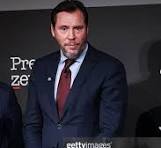
Spain’s Transport Minister Óscar Puente has resigned following two major high-speed rail accidents that have claimed a combined total of 115 lives within less than a year.
Puente announced his decision on Tuesday, six days after a collision near Urda, in Toledo province, killed 69 people and left dozens more injured. He has also withdrawn from the Socialist Party’s (PSOE) candidate list for the general election scheduled for 29 November, where he had been expected to lead the party’s campaign in Valladolid.
Speaking before Congress’s Permanent Deputation, Puente explained that he had made the decision to resign shortly after learning about the latest disaster. However, he delayed making the announcement publicly until immediate measures to strengthen railway safety had been introduced.
He told lawmakers that remaining in office after two accidents of such magnitude in under twelve months would be incompatible with his responsibilities as a minister.
Two railway disasters put government under pressure
The latest tragedy happened on 28 October near Urda, approximately 130 kilometres south of Madrid.
According to the initial investigation, a problem involving the automatic train protection system brought services to a standstill along a 63-kilometre section of the Madrid–Seville high-speed line.
Following instructions from the railway control centre at Madrid’s Atocha station, a Renfe train was permitted to continue its journey. It subsequently collided with the rear of a stationary Iryo train.
Investigators estimate that the Renfe train was travelling at between 160 and 200 kilometres per hour when the impact occurred.
The disaster followed another fatal accident in January near Adamuz, in Córdoba province, where 46 people lost their lives.
Both incidents involved Renfe and Iryo services operating on the Madrid–Seville route, Spain’s original high-speed railway corridor, which opened in 1992.
The two accidents have prompted serious questions about railway safety, maintenance investment, operational procedures and the management of Spain’s expanding high-speed network.
Political criticism grows following the accidents
Puente’s position had become increasingly difficult, with opposition parties demanding his departure.
The conservative People’s Party (PP) and far-right Vox had both called for his resignation before Tuesday’s announcement.
During the parliamentary hearing, PP representative Ester Muñoz criticised the minister’s handling of the two disasters and raised concerns about leaked communications between the Renfe driver and railway controllers at Atocha.
Vox representative Pepa Millán also launched a strong attack on railway safety before her party’s representatives left the session.
Pressure also came from parties supporting the government. Left-wing group Sumar and Izquierda Unida called for accountability, while representatives of Catalan and Basque political parties questioned the management and investment decisions affecting the railway network.
Not all parties demanded immediate ministerial resignation. EH Bildu warned against reaching conclusions before investigators had established the causes and responsibilities surrounding the accidents.
Prime Minister Pedro Sánchez subsequently praised Puente for accepting political responsibility and recognising the suffering of the victims and their families.
€30 million compensation package approved
The Spanish government has approved €30 million in emergency financial assistance for people injured in the Urda collision and relatives of those who died.
The payments are intended to provide immediate financial support while insurance claims and legal proceedings continue.
Additional railway safety measures have also been announced.
Under the new procedures, any decision to restart train services when automatic protection systems are unavailable will require confirmation from a second controller.
Where train drivers have to depend on visual observation because of a system failure, speeds will be restricted to 40 kilometres per hour.
Services on the Madrid–Seville route will also be reduced while the Railway Safety Agency reviews safety arrangements and the government works towards completing the delayed introduction of the European Rail Traffic Management System.
New technology and staffing measures planned
Further changes are expected to improve the monitoring of railway operations.
The government intends to introduce software capable of identifying unusual train movements, alongside artificial intelligence technology designed to detect potential irregularities and monitor communications between drivers and control centres.
Changes to staffing arrangements, rest periods and fatigue monitoring for railway controllers are also planned.
The train drivers’ union Semaf has raised concerns about working conditions and the use of degraded railway systems. It has called strikes at Renfe for 10 and 12 November.
Puente’s departure comes at a particularly difficult moment for the PSOE, with the 29 November general election approaching and opinion polls indicating that the party is trailing its political opponents.
For the families affected by the two railway disasters, however, the central issue remains establishing exactly what went wrong, ensuring accountability and restoring confidence in the safety of Spain’s high-speed rail network.