
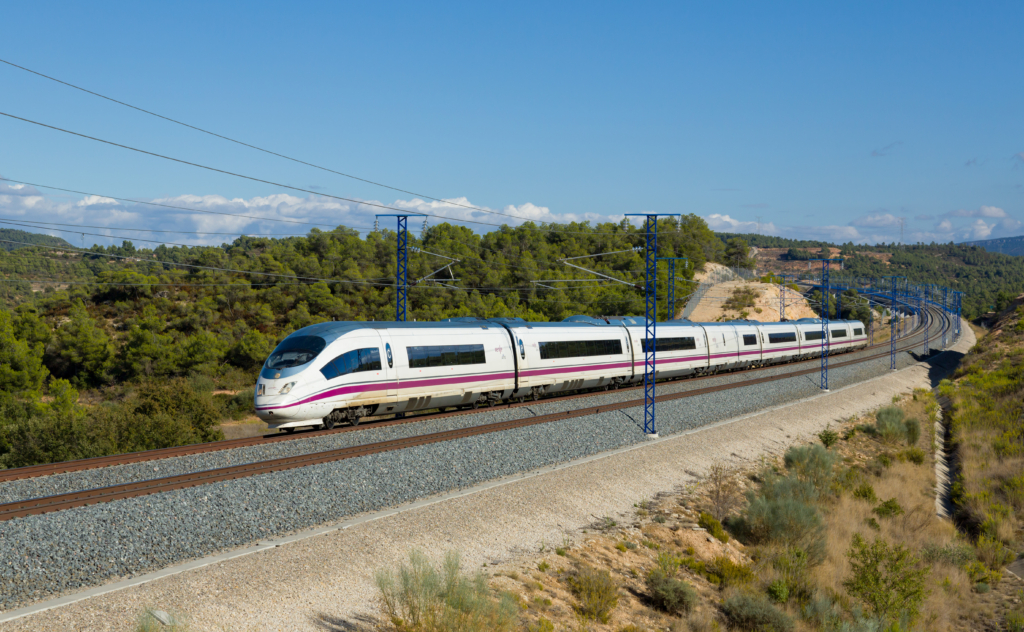
Rail strikes disrupt Spain’s train services for three consecutive days
Spain’s rail network faced three consecutive days of disruption from Tuesday, as a 24-hour strike by Renfe train drivers affected commuter services in Madrid and across Catalonia.
The industrial action is being followed by a separate general strike on Wednesday, which is expected to cause further disruption to rail travel. Renfe drivers are also due to stage another strike on Thursday, while a wider railway stoppage involving several unions is scheduled for Tuesday, 17 November.
The first day of action caused disruption beyond the planned reductions in services. Madrid’s Cercanías network suspended trains on several lines and operated only limited services on others. Rodalies also reported disruption across its Catalan network. Both operators said they were failing to meet the minimum service requirements.
Rain and heavy traffic on roads leading into and out of Madrid added to commuters’ difficulties.
Long-distance services were also affected, with cancellations on the Madrid–Barcelona AVE route and Avant services between Madrid and Valladolid.
Renfe warned passengers of delays and very limited availability of alternative seats, advising them to avoid non-essential journeys. The operator is allowing affected passengers to change or cancel their bookings without charge, including those travelling on services covered by minimum service requirements. Passengers will be notified by text message or email.
Cercanías in Madrid and Rodalies in Catalonia advised commuters to consider alternative transport.
Passengers requiring evidence of disruption can obtain certificates through the Madrid Cercanías and Rodalies websites.
General strike between two Renfe stoppages
Tuesday’s strike was called by the Spanish train drivers’ union Semaf and is scheduled to run until midnight.
Wednesday’s general strike is a separate industrial action. On Thursday, Semaf has called another stoppage involving Renfe drivers, with three periods of industrial action covering the morning, afternoon and late evening.
Minimum service requirements for the two Semaf strike days were set at 75% of normal Cercanías services during peak hours and 50% during the remainder of the day.
For Rodalies and regional trains in Catalonia, the required service levels are 66% during peak periods and 33% at other times.
The minimum service requirements also cover 65% of medium-distance trains, 72% of high-speed and long-distance services, and 20% of rail freight operations.
Catalonia’s territory minister, Sílvia Paneque, said the regional government would investigate why the minimum service levels had not been met.
Speaking to Catalunya Ràdio, she said: “Failure to comply with the minimum service requirements is unacceptable, and we will see these proceedings through and get to the bottom of what has been happening in recent days, with this rise in drivers failing to report for their scheduled services.”
A further railway strike is scheduled for 17 November. Semaf has joined unions representing workers at Adif, Spain’s rail infrastructure manager, in calling the action over working conditions and safety.
The stoppage is expected to affect not only Renfe but also drivers working for private passenger operators Iryo and Ouigo, as well as freight companies.
Safety concerns following fatal Urda crash
Semaf says the government has yet to fulfil commitments made in February following the rail accidents at Adamuz, in Córdoba, and Gelida, in Barcelona province.
The agreement reached at the time prevented a strike and included an additional €1.8 billion for maintenance and increased staffing at Adif and Renfe.
The union is demanding clearer procedures for operating trains during severe weather, improved communication between drivers and control centres during emergencies, and proper enforcement of driving-time rest breaks.
It is also calling for additional staff at the rail safety agency, Adif and Renfe.
The dispute has intensified following the collision involving a Renfe AVE train and an Iryo train at Urda, in Toledo province, Castilla-La Mancha, on 28 October. The accident killed 69 people.
Renfe drivers staged a 24-hour strike the following day.
Since the collision, Semaf has also called for a rule preventing trains from returning to normal operation following a failure of the LZB train protection system.
Transport minister holds talks with union
Spain’s first deputy prime minister, Carlos Cuerpo, met Semaf representatives twice last week after taking over as transport minister from Óscar Puente, who resigned following the Urda accident.
Adif president Luis Pedro Marco de la Peña also stepped down.
During discussions with the union, Cuerpo highlighted a €19 billion funding agreement for Adif covering maintenance, infrastructure improvements and network extensions between 2026 and 2030.
Semaf acknowledged that there had been a greater willingness to negotiate, but the meetings did not result in an agreement to call off the planned industrial action.
As a result, rail passengers face further disruption on Wednesday and Thursday, followed by the wider railway strike scheduled for 17 November.
