Eu prosecutors investigate possible misuse of funds following deadly Spanish rail disasters
European Union prosecutors have opened an investigation into the possible misuse of EU funds allocated to upgrading safety, signalling and communications systems on Spain’s Madrid-Seville high-speed railway line.
The investigation follows two deadly train accidents on the same line within nine months, which together claimed 115 lives.
The European Public Prosecutor’s Office (EPPO) confirmed on Friday that investigative measures were being carried out at the offices of Spain’s rail infrastructure authority, Adif, and the rail safety agency, AESF.
The inquiry is being conducted with support from a specialist unit of Spain’s Guardia Civil.
According to the EPPO, the investigation concerns possible fraud involving EU funds allocated to the renovation and upgrading of railway safety, signalling and communications systems on the Madrid-Seville line.
The office said the case had attracted considerable public interest but declined to release further details.
A Spanish judge assigned to the investigation will oversee compliance with legal safeguards and authorise any investigative measures requiring judicial approval, including searches or telephone surveillance.
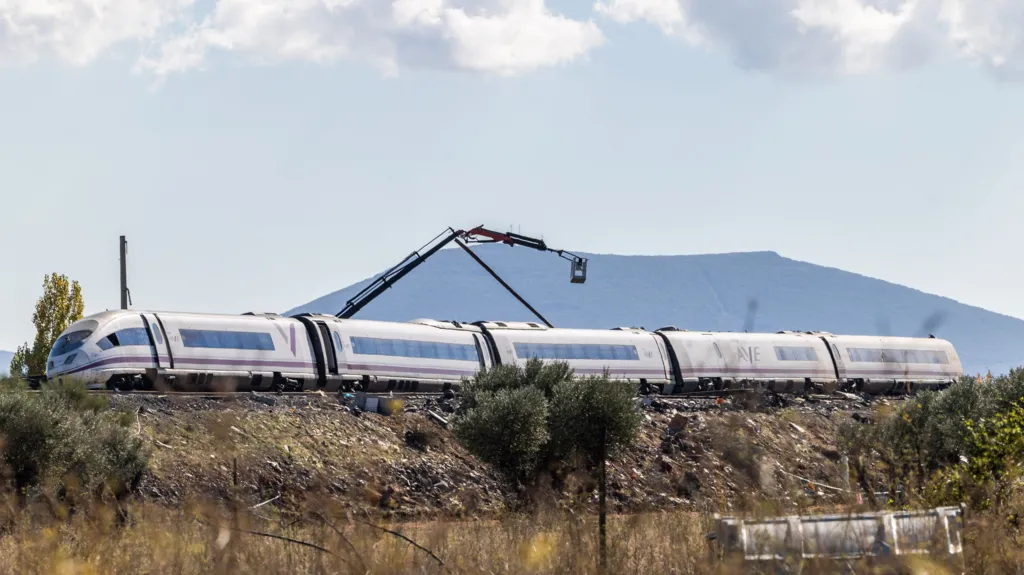
The latest investigation follows the train collision near Urda on 28 October, in which 69 people were killed.
The accident involved a Renfe train that collided with the rear of a stationary train operated by private company Iryo. The collision occurred outside the village of Urda, approximately 130km south of Madrid.
According to the information provided about the incident, the LZB train communication system, which monitors train positions, had failed. The Renfe train was subsequently authorised to travel at normal speed, despite the Iryo train ahead being unable to restart.
The Urda collision was the second fatal accident on the Madrid-Seville high-speed line this year. In January, 46 people died in a separate crash near Adamuz.
The two accidents have raised questions about railway safety and the maintenance of infrastructure on the line.
The latest disaster has also increased political pressure on Prime Minister Pedro Sánchez’s Socialist-led government.
Transport Minister Óscar Puente resigned this week following the two fatal accidents during his time in office. However, opposition parties, including the conservative People’s Party (PP) and far-right Vox, have called for Sánchez to resign as well.
The government is also facing increased scrutiny ahead of the parliamentary elections scheduled for 29 November.
The accidents have affected public confidence in rail travel, with reports of widespread cancellations and reduced passenger numbers at railway stations.
A funeral service for the 69 victims of the Urda disaster is scheduled to take place on Tuesday at Toledo Cathedral.
Puente’s successor, Carlos Cuerpo, has pledged to take the necessary measures to restore public confidence in Spain’s high-speed rail network.
On Friday, Cuerpo met survivors of the January Adamuz accident. They presented him with a list of 11 demands calling for improvements to railway safety.