
Spain train drivers’ strike called off after new railway safety agreement
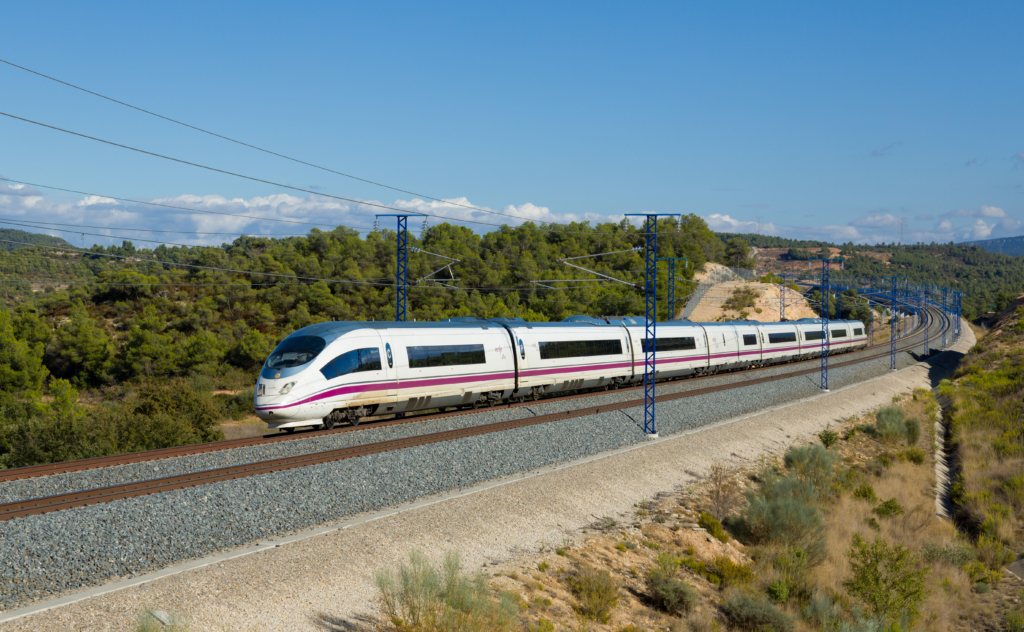
The Spanish train drivers’ union Semaf has cancelled its planned strike for Monday, 23 November, after reaching an agreement with the government and rail operator Renfe on railway safety and working conditions.
The agreement addresses commitments that had remained outstanding since February 2026 and introduces a series of measures aimed at improving railway safety, including a new protocol for dealing with adverse weather and other serious incidents.
Sources at the Ministry of Transport told Europa Press that the agreement brings an end to the labour disputes affecting the railway sector.
The ministry said the deal establishes a roadmap to strengthen the safety and reliability of Spain’s rail network. Measures include limits on driving and rest periods, as well as a new weather alert protocol based on thresholds in forecasts issued by the state meteorological agency Aemet.
Semaf said the agreement turns the union’s demands into measures that are legally established, operational and subject to verification. It also addresses outstanding commitments from the agreement reached in February 2026, which had contributed to the decision to call industrial action.
The union identified the protocol for dealing with adverse events as a key element in breaking the deadlock in negotiations. It said the measures would raise safety standards across the railway system.
Semaf described the strike mobilisation as a turning point for the sector, adding that the agreement provides a new framework for railway workers responsible for operating the network.
Other railway unions also suspend industrial action
The cancellation follows a separate decision by the CCOO, UGT and SCF unions to suspend their planned industrial action on Thursday.
The three unions reached an agreement with the Ministry of Transport after it accepted their demands concerning staffing levels and the regulation of working hours.
However, the CSIF union rejected the proposals, describing them as “absolutely insufficient”.
What does the agreement include?
The agreement between the government, Renfe and Semaf covers railway safety, working conditions, staff training and investment in rolling stock.
It builds on the agreement reached on 9 February and the Ministry of Transport’s commitment document dated 17 November.
Employment conditions and regulations
The agreement includes extending the system of reduction coefficients used to calculate earlier retirement ages to employees of railway companies.
It also provides for changes to regulations governing interruptions to driving periods and the inclusion of the principle of “fair culture” in railway legislation.
The Ministry of Transport has also committed to speeding up final approval of the preliminary agreement for Renfe’s fourth collective agreement. The negotiating committee is due to meet next week.
For new train drivers recruited under Renfe’s 2026 employment offer, the training period will be reduced to one month. Following this period, successful candidates will be offered permanent contracts.
The agreement also provides for two days of annual training, supported by the necessary instructors and simulators.
Support for employees and fleet investment
The 1990 agreement covering the treatment of employees affected by road accidents will be implemented through a binding instruction.
Renfe will also allocate €110 million between 2027 and 2029 to completely renew the air-conditioning systems across the fleet of trains operating under public service obligations.
Technical improvements to trains
Renfe will present a signed corrective action plan to address technical and safety problems affecting its 106, 452 and 453 series trains.
Each outstanding case must have a specific deadline and an associated safety measure.
The agreement also states that trains withdrawn from service will not automatically return to operation simply because a deadline has expired. Their return will depend on the existence of a provisional measure capable of controlling the identified risk.
New weather alert and safety procedures
One of the main elements of the agreement is a new weather alert protocol covering Spain’s general-interest railway network.
Under the protocol, services will be suspended at locations classified as having medium, high or unidentified risk until the red weather alert has ended.
Train drivers will also have the authority to stop rail traffic immediately at the safest available location if they identify a serious and imminent danger, regardless of the weather alert level in force.
Adif, the state railway infrastructure manager, will expand the weather information it receives from Aemet to include forecasts covering 48 and 72 hours.
By the end of the year, Adif will also prepare a list of particularly vulnerable railway sections and begin publishing daily information on temporary speed restrictions across conventional and metric-gauge lines.
Monitoring compliance with the agreement
The agreement establishes several measures to ensure that its commitments are implemented.
Follow-up meetings will take place on the first Wednesday of every month. A monthly communication channel will also be maintained between the Spanish Railway Safety Agency (AESF), the Labour Inspectorate and Semaf.
In addition, the joint risks committee will address the development of confidential systems through which railway workers can report safety concerns.